
Below is Day 1, and I hope to also summarize and reflect on Day 2 & Day 3
It's quite an involved read, but I hope you will all be able to get lots out of it :)
Amy Lin (@amylin1962): Tales of Passion
Amy shared some tales of passion. She had a wide variety of examples and resources that she shared, and she told the stories structured through Peter H Reynold's (@peterhreynolds) inspirational books. I will structure my recap in a similar way. I've found some videos that correspond to the books from Peter Reynolds that I would highly recommend (unless you've read the books)
The Dot
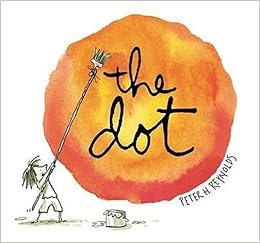
Amy didn't show the following video, but a quick search on Google came out with this reading of the book that I thought would be wonderful to share:
What do we do about students who come in and says that they just can't do it?
Amy then shares her thoughts on this, and talked about visualization. She cited an IKEA example to illustrate the power of visuals and images as a way of developing understanding.

"why can't we use pictures to talk about mathematics?"

Beyond this, she also gave examples using videos and verbal communications.
She shared her experience of how she's used her dog Kipper in several investigations within the classroom. She then also shared @fawnpnguyen 's wonderful website called visual patterns.
p.s. Fawn is awesome, it's not just her website. You need to follow her blog on a regular basis if you don't already.
After sharing a few more success stories from students of various grade levels, she went on to her next section
Ish

Using Ish was a launching pad, Amy suggested that we could do things that are math-ish, and challenged the way that the audience thought about "math."
She cited Fawn's example of "why wait for calculus," and followed with her own class examples where she has been attempting to spiral the curriculum through activities (I am unsure if she was inspired by @AlexOverwijk or not, but Al works a lot with what he calls "activity-based teaching." See some wonderful examples here).
Sky Color

The next section that Amy drew from was Sky Color by Peter Reynolds. This was a story about a girl who did not have a color blue and discovered that she could still draw the sky. This was her lead into talking about "how am I going to make the sky without blue paint?" which translated into "How am I going to teach without worksheets and textbooks?"
She shared some examples of how she's been attempting to do this,


I'm here

And this is the powerful image from Peter Reynolds that Amy left us:

Thoughts
This was a great start to the leadership conference. While we did not get a lot of opportunities to chat with each other during the presentation, Amy had some great words and examples to share. I loved the books that were shared, and have not seen them before. I think for a lot of secondary school teachers, the most difficult task would be developing the Sky Color. There are a lot of excellent stories, resources, and examples being shared around the #MTBoS, and more definitely needs to happen. In my personal experience, I have found it significantly easier to uncover curriculum expectations for the junior grades (9, 10) through students investigating problems and teasing out the conceptual understandings. The senior grades is a slightly different beast, and the implementation is arguably more difficult. I think this stems from a variety of challenges. I will list two big ones:
1. External pressures
Students, teachers, parents, administrators - for these grades levels - all are facing some external pressures. The pressure of acceptance to colleges and universities, the pressure of marks, the pressure of the unknown future...etc. These weights heavily influence the teacher's pedagogical decisions, as well as the dynamics in the classroom. The film (which we screened the next day) Race to Nowhere gave a powerful example of these pressures. Trailer below:
2. Context & Content
With respect to curriculum content in mathematics, it seems to a lot of teachers that we climb this ladder of abstraction. As we reach grade 11 and 12, there are (perhaps) more abstract representations and abstract connections within the curriculum. It isn't impossible to "concretize" these abstractions, (e.g. Dan Meyer's thoughts from two years ago) but it definitely becomes a bit more difficult. For example, we may still be able to lead in with an interesting #act1 hook that perplexes students and allows them to develop questions, but it takes longer in order to tease out the abstractions that is expected of students. Perhaps it also requires more prompts, build-ups, and follow ups. My own example of farming the painted cube makeover scenario:
.
I have been meaning to blog about that activity but haven't had time. This is a good opportunity to very briefly chat about that. It wasn't hard for students to develop questions and for us to explore them. I am not going to spend much time recounting the specifics of what we did during class (maybe in a different future post), but basically it follows #3act format with respect to developing perplexity, interest, then generating student process & solution. If you are unfamiliar, Dan Meyer gives a good breakdown here in terms of teacher moves.
There's lots of discussions and learning to be had from questions like "what does the next one look like" or "how many of each" or "how can we compare the number cubes of different colours." These are certainly all worth exploring, and we definitely did this in my class. There are, however, a lot of rich extensions that we'd want to get into - if we want to reach the curriculum expectations of grade 12. For example: intersections (when do we have the same number of the cubes), rational expressions (what does that look like), function behaviours (what is each colour of cubes doing), inequalities (do I have enough cubes to build shape 100?)...etc. These extensions are not unreachable. They are there. They can be explored. They are certainly interesting problems worth exploring. However, the challenge is often that some of those problems aren't natural. In other words, students don't think of those questions right away when looking at them. Rational expressions is a good example. Why would you normally think about the side lengths dividing each other and think about what that means? Or if you consider number of different colours - why would you normally consider what a division mean?
It may be that the image itself doesn't lend itself to easily consider those types of questions, and that a better image is needed - but the difficulty (or at least, perceived difficulty) lies in reaching a specific abstraction that may not be interesting, or not easily accessible.
Which made me think about whether it's worth exploring those questions or topics at all if they are not made interesting.
In any case. despite challenges, I believe these are worth tackling.
Coming up: Day 2 - Jo Boaler's (@joboaler) wonderful all-day session!

Thanks for such a thorough summary of the day. I can't wait to read the others.
ReplyDeleteI love your cube pattern. I'm looking forward to using it in class. Thanks for sharing.